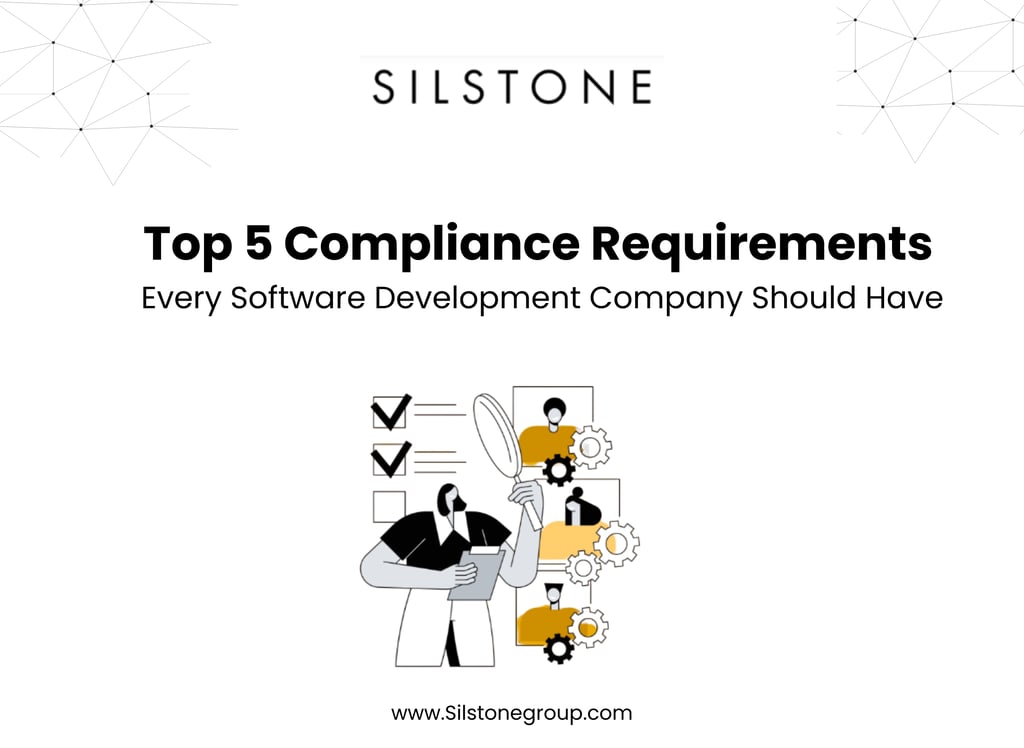
Top 5 Compliance Requirements Every Software Development Company Should Have
This blog explains the key compliance standards software companies cannot ignore. A concise overview of security, privacy, and regulatory essentials.
Keshav Gambhir
12/1/20254 min read
As technology platforms continue to scale across industries, software development compliance requirements have become a core expectation for any trustworthy engineering partner. Modern clients, investors, and enterprise buyers expect software companies to maintain strong software compliance standards and demonstrate a proactive approach to IT compliance requirements. Whether a company builds healthcare platforms, enterprise systems, AI products, or consumer apps, compliance is no longer optional. It is a direct driver of security, credibility, budget protection, and long term scalability.
This blog breaks down the top compliance requirements for software companies today and explains why software development company compliance needs to be part of your engineering culture from day one. We will also discuss essential certifications like ISO 27001 for software companies, GDPR compliance for software development, SOC 2 compliance requirements, and how secure software development lifecycle compliance can help reduce risks across the engineering process.
Throughout this blog, we will share best practices, implementation frameworks, and a software development compliance checklist that teams can use to evaluate their current readiness.
To support the reader further, we have embedded high quality external backlinks to trusted industry sources.
Understanding the Importance of Compliance in Software Development
Compliance is more than a security checklist. It is the foundation of trust for any organization that handles customer data, processes transactions, manages healthcare information, or supports enterprise workflows. Strong compliance requirements for software companies help prevent breaches, reduce legal risks, maintain regulatory alignment, and protect the overall reputation of the business.
Modern buyers increasingly prefer development partners who follow regulatory requirements for tech companies, document risk management in software development, and maintain a fully secure SDLC compliance framework. When a company aligns with software compliance standards, product teams can scale faster, win deals faster, and reduce downstream engineering debt.
Top 5 Compliance Requirements Every Software Development Company Should Have
1. Data Security Compliance and Risk Management Frameworks
Data security is the core of all software development compliance requirements. Companies must ensure that personal information, proprietary datasets, or sensitive system data is fully protected at all stages of development.
This includes encryption standards, identity management practices, access control, and continuous monitoring. Software firms should maintain a comprehensive data security compliance checklist and integrate it into developer workflows. Strong risk management in software development also ensures continuous vulnerability scanning, code reviews, and automated risk alerts.
For more guidance on implementing strong data security measures, organizations can learn from trusted resources such as the National Institute of Standards and Technology
https://www.nist.gov
2. ISO 27001 for Software Companies
ISO 27001 is one of the most recognized international standards that ensures an organization manages information security effectively. For software companies working across enterprise sectors, ISO 27001 certification increases trust and reduces procurement barriers.
ISO 27001 aligns directly with secure SDLC compliance and establishes processes for:
-Information security governance
-Asset management
-Access control frameworks
-Incident response
-Vendor risk assessment
Because ISO 27001 applies to organizations of all sizes, it is particularly useful for software development companies looking to demonstrate measurable maturity in information security.
To understand the ISO 27001 controls in more detail, companies can explore information from the International Organization for Standardization
https://www.iso.org
3. GDPR Compliance for Software Development and Global Data Protection
Any company building digital products for global audiences must follow GDPR compliance for software development. GDPR outlines the regulatory requirements for tech companies that process customer data within or connected to the European Union.
Key GDPR requirements for software firms include:
-User consent and data transparency
-Data minimization
-Secure data storage and transfer
-Right to access and right to be forgotten
-Data breach notification procedures
GDPR affects both product architecture and backend engineering workflows. Teams should incorporate GDPR readiness into their software development compliance checklist from the early discovery phase.
More details on GDPR regulations are available on the official EU GDPR website
https://gdpr.eu
4. SOC 2 Compliance Requirements for Modern Software Teams
SOC 2 compliance validates that a company implements strong controls for security, availability, processing integrity, confidentiality, and privacy. SOC 2 is especially important for software development companies serving enterprise clients, SaaS platforms, and cloud solutions.
SOC 2 compliance requirements help ensure:
-Continuous logging and monitoring
-Vendor security assessment
-Control-based governance
-Incident detection and response
-Secure handling of customer data
SOC 2 is trusted worldwide and is often a procurement requirement during RFPs. It builds strong credibility and helps software development teams demonstrate their commitment to secure and compliant engineering practices.
Companies looking to understand SOC frameworks can refer to guidance by the American Institute of CPAs
https://www.aicpa.org
5. Industry Specific Regulations such as HIPAA Compliance for Software Products
Certain industries have specialized compliance expectations. Healthcare platforms require HIPAA compliance for software products, finance requires PCI DSS, and education requires FERPA readiness. If a company builds solutions for regulated sectors, understanding these requirements becomes essential.
HIPAA compliance ensures the protection of medical data, secure data transfer, audit logs, encryption, and patient privacy. It is a major part of software development company compliance for teams building patient management systems, digital health platforms, or medical workflows.
To explore HIPAA guidelines and privacy rules, companies may review the information provided by the US Department of Health and Human Services
https://www.hhs.gov
By mastering industry specific regulations, software companies gain a competitive advantage when entering regulated markets.
Best Practices for Implementing Software Compliance Standards
Strong compliance requires a combination of governance, culture, and engineering rigor. Below are important best practices that support software compliance standards.
Building a secure software development lifecycle compliance strategy that includes continuous code scanning, security integrated pipelines, and regular architecture reviews
Implementing a risk management model that flags vulnerabilities early and prevents product downtime and data lossConducting annual audits and external assessments to validate alignment with regulatory requirements for tech companies
Maintaining compliance documentation that supports onboarding, investor readiness, and enterprise procurement processes
These practices ensure long term resilience and allow teams to scale without compromising security or compliance.
For more insights about secure development practices, developers can review Microsoft’s software security resources
https://learn.microsoft.com/en-us/security
Conclusion
Compliance is no longer something software companies can ignore. The market expects secure engineering, regulatory readiness, and responsible data management. By adopting stronger software development compliance requirements and incorporating frameworks such as ISO 27001, GDPR, SOC 2, and HIPAA when relevant, organizations build more trustworthy, scalable, and enterprise ready products.
If you want to build secure, compliant, and scalable software systems, Silstone provides full stack development solutions with a compliance first approach. Our engineering teams specialize in regulated industries, secure SDLC frameworks, and long term product scalability. To learn more about how Silstone can help you build compliant digital platforms, visit.
Silstone combines domain expertise, strong engineering processes, and a deep understanding of compliance requirements for software companies. Whether you are building a new MVP or scaling a multi feature platform, our team is ready to support your product journey.
LINKS
Discover
© 2026. All rights reserved.